Director: “A very complex story to tell”
An exclusive interview by Variety with Stefano Sollima, who discusses the highly anticipated second installment of the series The Monster of Florence, which focuses on the crimes of the Monster of Florence. We already know that the second season will be titled The Monster: Pietro Pacciani and will cover the trial of Pacciani and then that of his accomplices. Filming also took place in Florence and San Casciano Val di Pesa last September.
The second chapter of The Monster of Florence, which in October 2025 became Netflix’s most-watched series globally in its first week in release, focuses on the “Snack Buddies” lead. And, in particular, on the figure of Pacciani, who was at the center of a marathon 1994 trial filled with unexpected twists and turns. Pacciani was given a life sentence for killing six of the eight couples and also found guilty of raping his two daughters. That ruling was subsequently overturned and Pacciani died in 1998 from a heart attack, at the age of 73, before he could be retried.
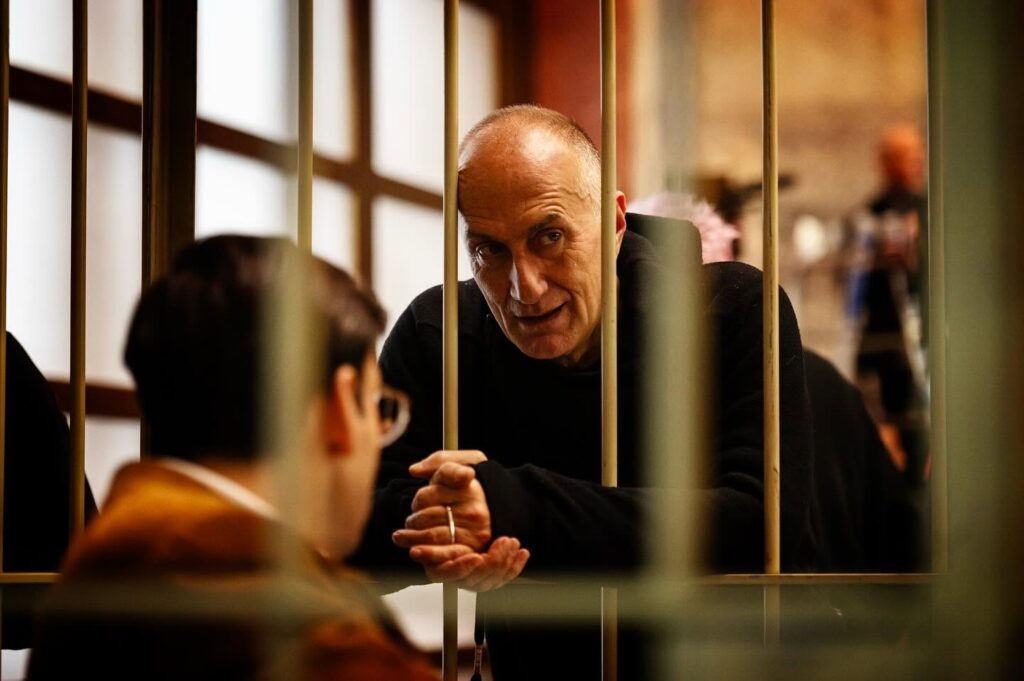
Below, Sollima speaks to Variety on set about “The Monster of Florence’s” new episodes.
Stefano, tell me about this new installment from a narrative standpoint. What’s different this time around?
The whole story unfolds within a massive narrative arc that spans the roughly 20 years of the hunt for the Monster. In the first installment, we covered the so-called “Sardinian lead.” We started with two major investigations and looked at everyone who had been accused, tried, and imprisoned over the decades on suspicion of being the Monster. Now, this second segment focuses on Pietro Pacciani and his so-called “Snack Buddies,” as the media dubbed them.
This segment represents an almost total shift, which is why I call “The Monster” an anthology series. Even though it’s set within the context of a 20-year manhunt, this specific part of the story — including the investigators, the protagonists and the Monsters themselves — is completely different from the first installment. In a sense, these are two experiences that you can enjoy independently of one another. They are self-contained narratives embedded within the larger framework of the hunt. Pacciani is perhaps this story’s most iconic figure, especially in Italy. People here feel a certain familiarity with his name. Yet, Pacciani is a far more controversial figure than popular belief suggests. He was accused and convicted in the first trial, then acquitted, only to be charged again — through his associates — with being the Monster of Florence.
So Pacciani has been charged with the murders but is still not fully convicted, right?
Let’s say that it’s a mystery that is still debated today, especially among those convinced of his guilt. And it’s a very complex story to tell. But our format since the first season is that you choose the perspective of the single Monster.
Now that there is just one primary suspect, does that change the structure?
The narrative structure is perhaps more linear now, even though this part of the story, concerning Pacciani, spans from 1951 to 1996, covering a massively long time frame. However, unlike the previous cases — where multiple people were accused of the same murder, but were linked by an incredible web of friendships and relationships — here we are dealing with essentially a single culprit. That’s why it’s likely to be a bit more linear. And I have to say, the way the investigative hypothesis is presented is quite compelling and striking. There are a whole series of coincidences. But obviously, they aren’t enough to prove his guilt. In fact, they are still a subject of debate.
Here is the full interview.